Starting Solids With Twins: When, How, and What to Expect
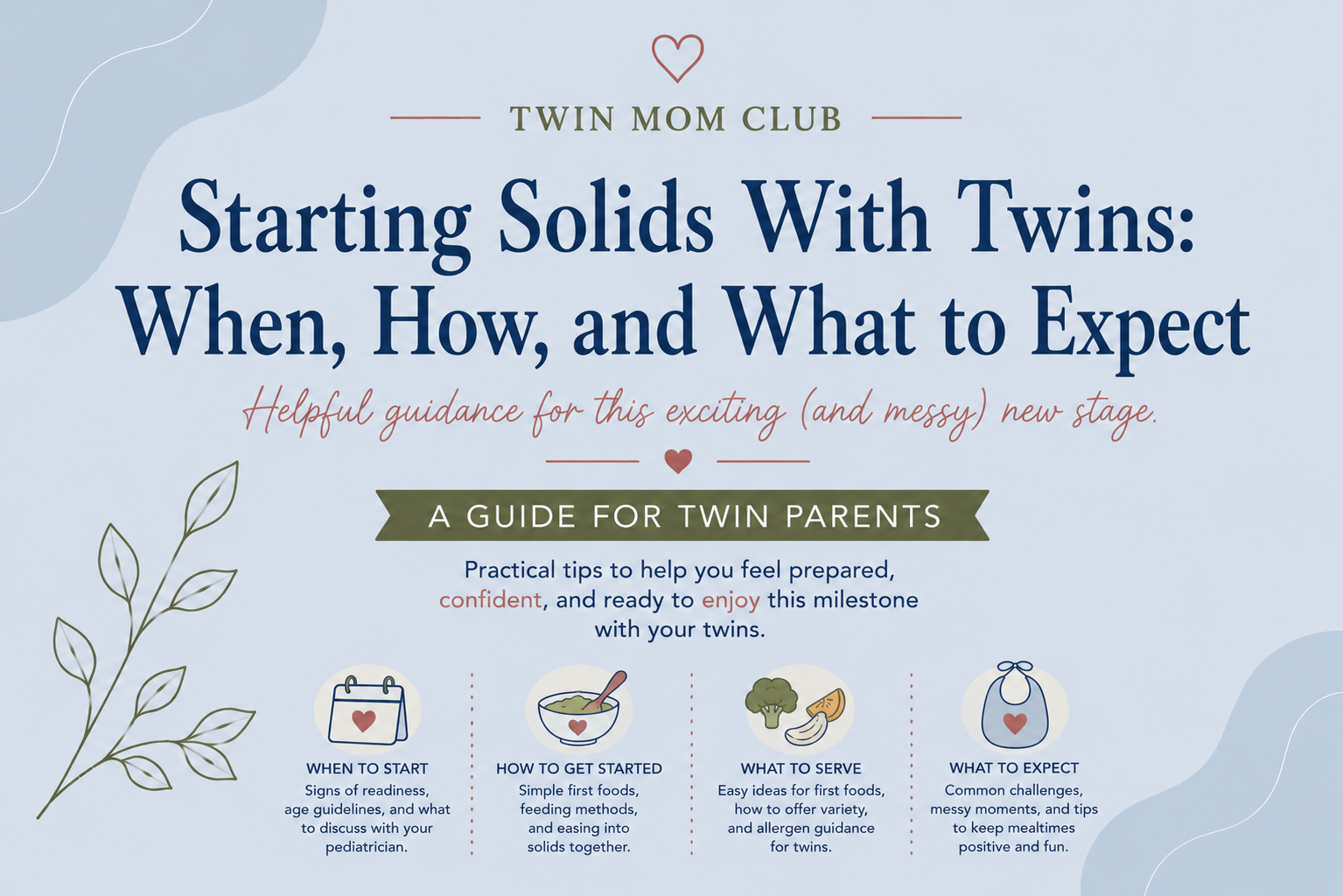
Introducing solid foods is one of the most exciting milestones during your twins' first year. It's also one that tends to come with plenty of questions. When should you start? Should both babies begin at the same time? Is baby-led weaning better than purees? And how do you manage feeding two babies without feeling completely overwhelmed?
The good news is that starting solids with twins doesn't have to be complicated. Like so many parts of parenting twins, the goal isn't perfection. It's finding a routine that works for your family while helping your babies safely explore new foods and develop healthy eating habits.
When Are Twins Ready for Solids?
Most babies are ready to begin solids around 6 months of age, but readiness depends more on developmental milestones than the calendar.
Your twins may be ready if they can:
Sit with minimal support.
Hold their head and neck steady.
Show interest in food by watching you eat or reaching for food.
Open their mouth when food is offered.
Move food from a spoon into their mouth instead of automatically pushing it back out.
If your twins were born prematurely, your pediatrician may recommend using their adjusted age when deciding when to introduce solids. Every baby develops at their own pace, so it's perfectly normal if one twin seems ready before the other.
Do Twins Have to Start Solids at the Same Time?
Not necessarily.
Although many twins reach developmental milestones together, it's common for one baby to be ready before the other. One twin may have better head control, show more interest in food, or sit independently sooner.
If that happens, don't panic.
Your pediatrician can help you decide whether it makes sense to begin with one baby first or wait until both are ready. There's no prize for starting on the exact same day.
Baby-Led Weaning or Purees?
This is one of the biggest decisions parents face, but it doesn't have to be an either-or choice.
Baby-led weaning (BLW) allows babies to feed themselves appropriately sized pieces of soft food from the beginning.
Purees involve spoon-feeding smooth foods before gradually introducing more texture.
Many families choose a combination of both. They may offer oatmeal or yogurt with a spoon while also letting their babies explore soft avocado slices or steamed vegetables with their hands.
The best approach is the one that allows your babies to safely learn and enjoy eating while fitting your family's comfort level and lifestyle.
Great First Foods for Twins
There's no perfect first food, but choosing simple, nutrient-rich options is a great place to begin.
Some excellent first foods include:
Avocado
Sweet potato
Banana
Oatmeal
Plain whole milk yogurt
Mashed beans
Soft scrambled eggs
Steamed carrots
Soft pears
Unsweetened applesauce
When introducing common allergens, offer them in a form that’s safe for your babies’ age and development, and watch for signs of an allergic reaction.
Introducing Common Allergens
Parents used to be told to delay allergenic foods, but current recommendations have changed.
Introducing common allergens around the time solids begin may actually help reduce the risk of developing certain food allergies.
Common allergens include:
Peanut
Egg
Dairy
Wheat
Soy
Tree nuts
Fish
Shellfish
Sesame
Talk with your pediatrician before introducing common allergens if either baby has severe eczema or a known food allergy, or if you have other concerns about food allergies.
Feeding Two Babies Can Feel Like a Circus
The first few meals often feel messy, chaotic, and surprisingly entertaining.
One baby may eagerly grab everything on the tray while the other stares suspiciously at a single pea for five minutes. One twin may love bananas while the other spits them right back out.
That's all part of the learning process.
Having both babies in high chairs at the same time can make meals feel more organized. It also allows your twins to watch each other, which often encourages curiosity and exploration.
Remember that during the first several months of solids, your babies are learning just as much as they're eating.
Milk Is Still Their Main Source of Nutrition
It's easy to get excited about solids, but remember that breast milk or formula continues to provide most of your babies' nutrition throughout the first year.
Think of solids as practice.
They're learning how to chew, swallow, use their hands, explore different textures, and experience new flavors. Some meals may end with more food on the floor than in their mouths, and that's completely normal.
Progress happens one bite at a time.
Don't Worry If They Eat Differently
Twins are individuals, especially when it comes to food.
One baby may happily eat almost everything you offer, while the other seems cautious about every new texture or flavor. Resist the urge to compare them or pressure either baby to eat more.
Appetites naturally vary from day to day, and it's normal for preferences to change as your babies grow.
Creating a relaxed mealtime environment helps children develop a positive relationship with food over time.
My RN Perspective
Starting solids is an exciting milestone, but it isn't a race. I encourage parents to focus on developmental readiness rather than comparing their babies to milestone charts or other children. Breast milk or formula should remain your babies' primary source of nutrition throughout the first year, while solids gradually become a larger part of their diet.
If you ever have concerns about your babies' growth, feeding skills, or reactions to foods, don't hesitate to discuss them with your pediatrician.
Dr. Judy’s SLP Perspective
One of the biggest misconceptions I hear is that gagging and choking are the same thing. They aren't.
Gagging is a normal protective reflex that helps babies learn how to safely manage food in their mouths. It can look scary, especially for first-time parents, but it's often part of learning to eat.
Choking, on the other hand, is a medical emergency because the airway is blocked.
Understanding the difference can make introducing solids feel much less intimidating. It's also one reason I encourage parents to familiarize themselves with infant choking first aid before beginning solids.
Twin Mom Tip
Expect a mess.
The first few months of solids aren't about clean high chairs or perfectly balanced meals. They're about exploration, learning, and helping your twins build confidence around food. A washable splat mat under the high chairs might become one of your favorite purchases.
Frequently Asked Questions
When should twins start solids?
Most babies are ready around 6 months of age once they show developmental signs of readiness. If your twins were born prematurely, your pediatrician may recommend using their adjusted age.
Should I feed both twins at the same time?
Whenever possible, yes. Feeding both babies together helps establish a routine and can make mealtimes easier to manage.
What if one twin likes food more than the other?
That's completely normal. Twins often have different personalities, appetites, and food preferences. Continue offering a variety of foods without pressure.
Is gagging normal?
Yes. Gagging is a normal part of learning to eat and helps protect babies as they develop feeding skills. Choking is different and requires immediate intervention.
Related Guides
Twin Infant Sleep Guide
Infant Twin Daily Routine
Best First Foods for Twins
Baby-Led Weaning With Twins
Purees vs. Baby-Led Weaning for Twins
References
American Academy of Pediatrics. Starting Solid Foods.
Centers for Disease Control and Prevention. When, What, and How to Introduce Solid Foods.
American Academy of Pediatrics. Prevention of Peanut Allergy.
Medical Disclaimer
This article is for educational purposes only and should not replace medical advice. Always consult your pediatrician with questions about introducing solids, food allergies, or your babies' nutrition.
