NICU FAQs for Twin Parents: Answers to the Most Common Questions
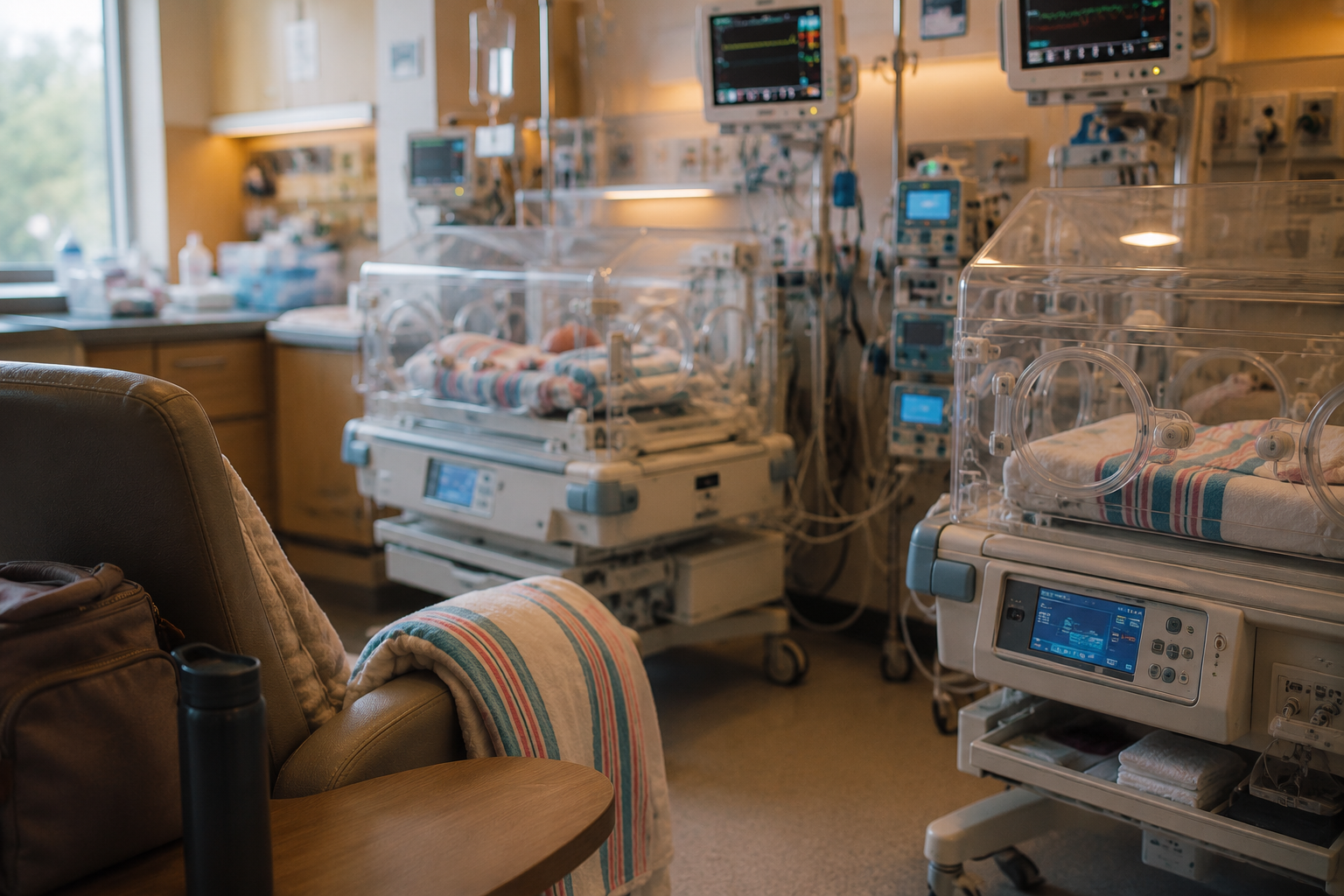
Having one or both twins in the NICU is one of the hardest parts of the twin journey for many families. The machines, the terms, the uncertainty, and the separation can feel overwhelming.
As a nurse and twin mom, here are clear answers to some of the questions twin parents ask most often, with links to deeper guides when you want more detail.
Getting Oriented
-
NICU stands for Neonatal Intensive Care Unit. It is a specialized hospital unit that cares for newborns who need extra support, often because they were born early, are small, or have medical needs that require close monitoring.
-
Twins are more likely to be born early and at lower birth weights than singletons. Even late-preterm twins, born between 34 and 36 weeks, may need extra support with breathing, feeding, temperature regulation, or blood sugar.
-
The first visit can feel emotional and overwhelming. There may be monitors, wires, alarms, and equipment you have never seen before. Your babies' nurses can explain what everything does and show you how to touch, hold, and interact with your babies safely.
→ See: Your First NICU Visit
-
You will hear a lot of new words very quickly: CPAP, desats, NG tube, corrected age, and about a hundred other terms you never expected to learn.
Daily Life in the NICU
-
Often, yes, once your babies are stable enough. Many NICUs encourage skin-to-skin contact, also called kangaroo care. Your baby's nurse can help you know when it is safe and how to manage all those tiny wires and tubes.
And with twins, ask about holding both babies together when they are medically ready. Your NICU team can help determine when and whether that is appropriate for your babies.
-
Write questions down as they come to you. NICU days can be overwhelming, and it is very easy to forget what you wanted to ask the second someone walks into the room.
Good topics include feeding plans, breathing support, expected milestones, changes from the previous day, and what your babies will need to accomplish before going home.
-
Premature babies often have immature nervous systems and tire easily. Feeding, staying warm, and simply growing take a lot of energy. Sleepiness can also be affected by gestational age, medications, and your baby's individual medical needs.
If your baby seems sleepier than usual or you notice a change in their behavior, tell their NICU nurse or medical team.
-
Corrected age, also called adjusted age, accounts for how early your babies were born. Healthcare providers and therapists may use corrected age when looking at growth and developmental milestones, particularly during the first couple of years.
→ See: Corrected Age vs. Actual Age
Preparing and Going Home
-
If you know there is a higher chance your twins may spend time in the NICU, learning a few basic terms and asking about your hospital's NICU policies ahead of time can make those first days feel a little less unfamiliar.
You do not need to become a NICU expert before your babies arrive. Knowing where to start is enough.
-
Every NICU has its own discharge criteria, and every baby's situation is different. In general, babies are working toward milestones such as maintaining their temperature, growing steadily, feeding safely, and being medically stable without significant breathing events.
Your twins may not reach those milestones at exactly the same time. Some twins come home together, while others come home days or even weeks apart.
-
This happens more often than many twin parents expect, whether one baby never needs the NICU or one twin is ready to come home before the other.
It can create a strange mix of emotions. You may feel relieved to have one baby with you while still worrying about the baby in the hospital. You may also find yourself trying to recover from birth while dividing your time between home and the NICU.
There is no perfect way to split yourself between two places. Take it one day at a time and let other people help with the things they can handle.
Taking Care of Yourself
-
Mom guilt is real. NICU guilt can show up in a hundred different ways, especially when you are trying to divide yourself between two babies, the hospital, home, and your own recovery.
You may feel guilty leaving the NICU, guilty spending more time with one twin, guilty needing sleep, or even guilty for feeling relieved on a good day.
Give yourself room to have more than one feeling at the same time. NICU life is complicated, and your emotions may be too.
-
Remember that you are recovering from birth, too.
Let people bring meals, help with older children, drive you to the hospital, wash bottles or pump parts, or take something else off your plate. You do not have to spend every minute at your babies' bedside to be present and involved in their care.
Ask your NICU team how you can participate when you are there, and give yourself permission to sleep, eat, shower, and recover when you are not.
Final Thought
A NICU stay with twins is rarely what anyone pictured. You may feel scared, tired, hopeful, relieved, frustrated, and grateful all in the same day.
You do not have to understand every monitor or memorize every NICU term on day one. Start with the questions that matter right now. Tomorrow, you can learn a little more.
One shift, one update, one baby at a time.
